Decathlon E-Bikes 2026: 5 Sub-Brands Compared, €850 to €5,000
·
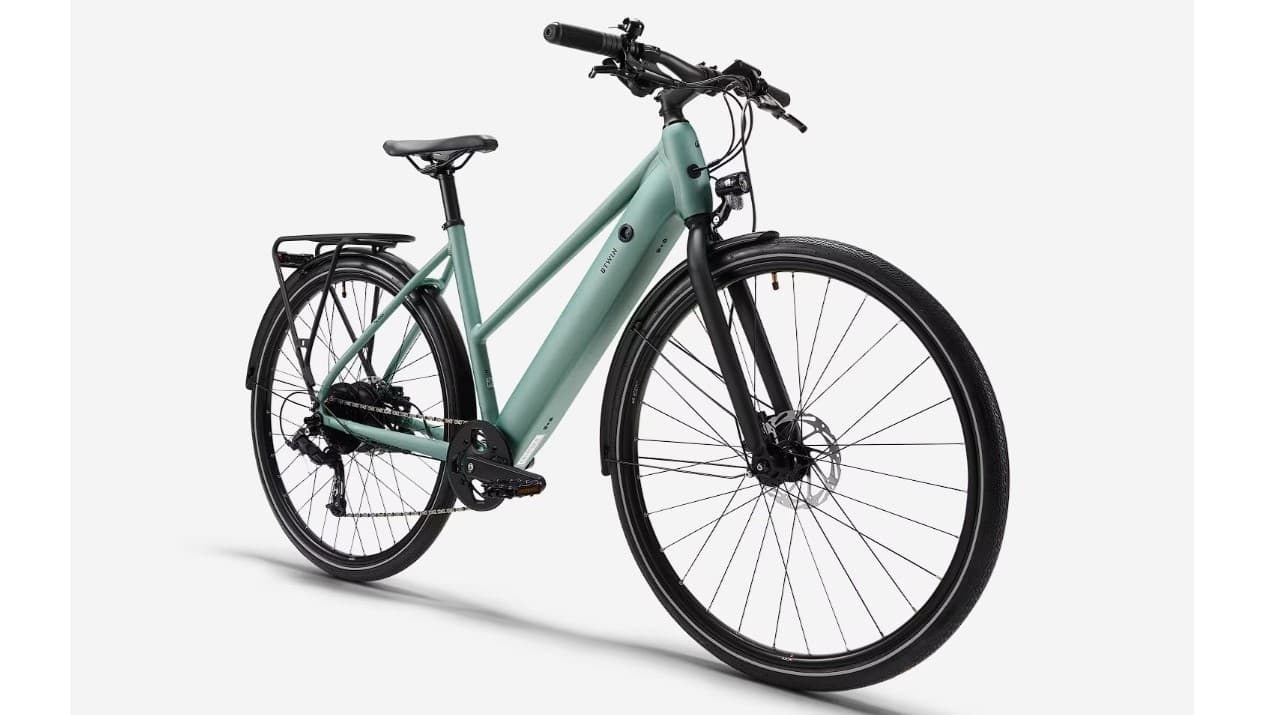
Decathlon is one of the world’s largest sporting goods retailers and a major player in the electric bike market through its in-house brands Elops, Riverside, Rockrider, BTWIN and Van Rysel. Its electric bike range spans urban commuting, trekking, performance road cycling and electric mountain biking.
Decathlon electric bikes are designed in-house, tested extensively, and sold through one of the largest global retail and service networks in cycling.
At a Glance
- Founded: 1976, France
- Business Model: Global sporting goods retailer with in-house bike brands
- Markets: 56 Countries including the UK and throughout the EU
- E-Bike Brands: Elops, Riverside, Rockrider, BTWIN, Van Rysel
- Price Range: Typically £650 to £4,799 / €850 to €5,000 depending on category and specification
Overview
Decathlon is among the largest bicycle retailers globally, operating thousands of stores across Europe, the UK and international markets. Unlike many e-bike brands that rely on third-party manufacturing and online-only sales, Decathlon designs, tests and sells its own electric bikes under clearly segmented sub-brands.
This vertically integrated approach allows Decathlon to offer competitive pricing, long-term spare part availability and in-store servicing, factors that are particularly important for first-time e-bike buyers.
Decathlon E-Bike Sub-Brands Explained
Elops – Urban & City E-Bikes
Designed for daily commuting and city riding.
Example models on Velo Index:
- Elops Long Distance 500
- Elops 500 E
- Elops 900 E
Typical characteristics:
- Upright riding positions
- Rear hub motors or compact mid-drive systems
- Integrated accessories
- Emphasis on comfort and practicality
Riverside – Trekking & Hybrid E-Bikes
Built for versatility across roads, paths and longer-distance riding.
Example models on Velo Index:
- Riverside 520 E
Typical characteristics:
- Larger batteries
- Torque-sensing assistance
- Suitable for commuting and leisure touring
Rockrider – Electric Mountain Bikes
Decathlon’s off-road and trail-focused e-MTB range.
Example models on Velo Index:
- Rockrider E-ST 500
- Rockrider E-EXPL 500 S
- Rockrider E-ACTV series
Typical characteristics:
- Mid-drive motors from Brose, Shimano or Yamaha
- Torque sensors
- Trail-oriented geometry
BTWIN – Entry-Level & Utility E-Bikes
BTWIN represents Decathlon’s heritage cycling brand and continues to cover utility, folding and cargo e-bikes.
Example models on Velo Index:
- BTWIN LD 920 E
- BTWIN LD 940 E
- BTWIN E-FOLD 500
- BTWIN R500E Cargo
Van Rysel – Performance & Road Cycling
Van Rysel is Decathlon’s premium performance-focused brand.
Typical characteristics:
- Lightweight frames
- Road and fast-commuting focus
- Higher-end components and pricing
Motors, Batteries and Sensor Technology
Decathlon electric bikes use a wide variety of motor systems, depending on model and category. Based on current listings on Velo Index, these include:
- Owuru central motors on higher-end BTWIN models
- Brose mid-drive motors on Rockrider e-MTBs
- Shimano EP series motors on performance models
- Yamaha PW-series mid-drive motors
- Decathlon-branded rear hub motors on entry-level city bikes
Battery capacities typically range from 250Wh to over 700Wh, with trekking and MTB models offering the highest range.
Sensor Types
Decathlon uses both torque and cadence sensors, depending on model:
- Torque sensors: Common on Riverside, Rockrider, and higher-end Elops and BTWIN models
- Cadence sensors: Found on entry-level city and budget e-bikes
- Hybrid systems: Some models combine torque and cadence sensing
This variety allows Decathlon to cover both entry-level and more natural-feeling pedal assist experiences.
Manufacturing and Global Presence
Decathlon designs its bicycles in-house at the B’TWIN Village in France, which acts as the company’s central hub for bicycle design, prototyping and laboratory testing. Products are validated against international standards as well as Decathlon’s internal testing requirements.
Manufacturing is carried out through a global network of Decathlon-owned factories and long-term partner suppliers operating across more than 45 countries. Some higher-end bicycles, including selected Rockrider and Van Rysel models, are assembled in France, while most production takes place internationally depending on the model category.
How Decathlon Compares to DTC E-Bike Brands
Compared with direct-to-consumer (DTC) e-bike brands, Decathlon follows a retail-first model.
Key differences include:
- Physical stores with servicing and warranty support
- Long-term spare parts availability
- Clear regional compliance (EU, UK)
- Less reliance on online-only support
While DTC brands often compete aggressively on price, Decathlon’s strength lies in after-sales support, accessibility and in-store service, which many buyers prioritise for long-term ownership.
Which Decathlon E-Bike Should You Choose?
- City commuting: Elops
- Mixed riding and touring: Riverside
- Trail and off-road riding: Rockrider
- Utility, cargo or folding: BTWIN
- Performance road or fast commuting: Van Rysel
Your ideal choice depends on riding surface, distance, desired assist feel and servicing preference.
Price Tier Breakdown
- Entry-level (€850–€1,200): Cadence-based city and hybrid models
- Mid-range (€1,300–€2,500): Torque-sensing commuters and trekking bikes
- High-end (€2,600–€5,100): Performance e-MTBs and premium road e-bikes
Warranty, Support and Servicing
Decathlon offers one of the most extensive servicing networks in cycling:
- In-store repairs and diagnostics
- Spare parts availability for in-house models
- Warranty handling through physical locations
This contrasts with many DTC brands that rely on remote support and third-party workshops.
Strengths
- Wide range of e-bike categories
- Strong value for money
- Extensive physical retail and service network
- Clear segmentation by riding type
Considerations
- Model naming can be confusing
- Availability varies by region
FAQs
Where are Decathlon electric bikes made?
Decathlon electric bikes are designed in-house in France and manufactured through a global network of Decathlon-owned factories and partner suppliers. Some higher-end models are assembled in France, while most production takes place internationally.
Who makes Decathlon e-bikes?
Decathlon designs and engineers its e-bikes in-house at the B’TWIN Village in France and manufactures them through Decathlon-owned factories and long-term partner suppliers across more than 45 countries, under its Elops, Riverside, Rockrider, BTWIN and Van Rysel brands.
Do Decathlon e-bikes use torque or cadence sensors?
Decathlon uses both. Many mid-range and higher-end models use torque sensors, while entry-level city bikes may use cadence sensors. Some models combine both systems.
Are Decathlon e-bikes good for beginners?
Yes. Decathlon offers a wide selection of beginner-friendly electric bikes with clear category separation and in-store support.
Summary
Decathlon electric bikes offer one of the broadest and most structured lineups in the market, spanning entry-level city bikes to high-performance e-MTBs. With in-house design, extensive testing, and a global service network, Decathlon remains a strong option for riders prioritising accessibility, support and long-term ownership.
Related reading:
Brand Spotlight: Engwe
Brand Spotlight: Tenways
Image Credit
Official product and lifestyle imagery credit: Decathlon.